
Thermal Drones for Nest Finding
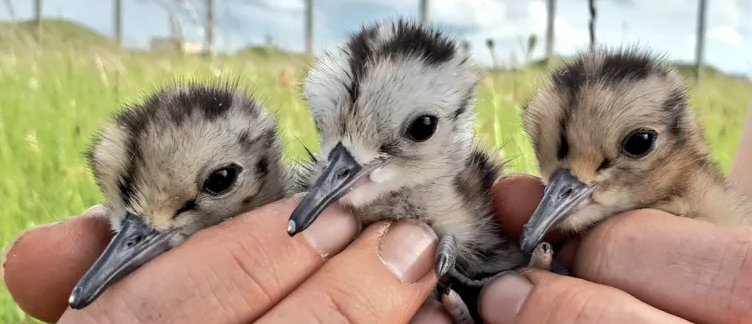
Thermal drone technology is rapidly reshaping how ecologists and conservationists locate and protect ground-nesting birds. By detecting heat signatures from incubating adults or warm nests, drones allow us to survey large areas with minimal disturbance. At Ecotainment, the UK’s leading ecological drone consultancy, we’ve been applying this technology on some of the country’s most sensitive breeding grounds, combining ecological expertise with advanced aerial surveys.
A review published in Methods in Ecology and Evolution highlights how drones equipped with infrared sensors can detect animals in low-light conditions or habitats where individuals blend into their surroundings. This capability is particularly valuable for ground-nesting birds, whose nests are often extremely difficult to find using traditional field methods.
Real-world conservation
dotterel surveys: RSPB
A recent report from Guardian explains how the RSPB are using drones to locate rare dotterel on remote upland breeding grounds. By scanning large areas from above, conservationists can reduce time spent walking across fragile habitats and minimise disturbance to breeding birds. Ecotainment has extensive experience in similar surveys, applying thermal drone monitoring to upland habitats where accessibility and weather conditions make traditional surveys challenging.
curlew: NRW
Another example comes from Wales, where thermal drones are being used to locate nests of the Eurasian curlew, one of the country’s most threatened breeding birds. This BBC article explains that drones equipped with thermal imaging cameras can “spot heat from nests hidden in deep grass and bogs,” allowing researchers to find nests that would otherwise be almost impossible to detect.
At Ecotainment, we’ve deployed thermal drones in curlew habitats, working alongside conservation organisations to map nest locations and support proactive management. By locating nests early in the breeding season, our surveys help conservation teams protect them using measures such as temporary electric fencing and predator management.
Thermal drone surveys also allow us to work closely with farmers. Once nests are identified, mowing schedules can be adjusted and breeding areas safeguarded, improving chick survival and enabling targeted conservation interventions.
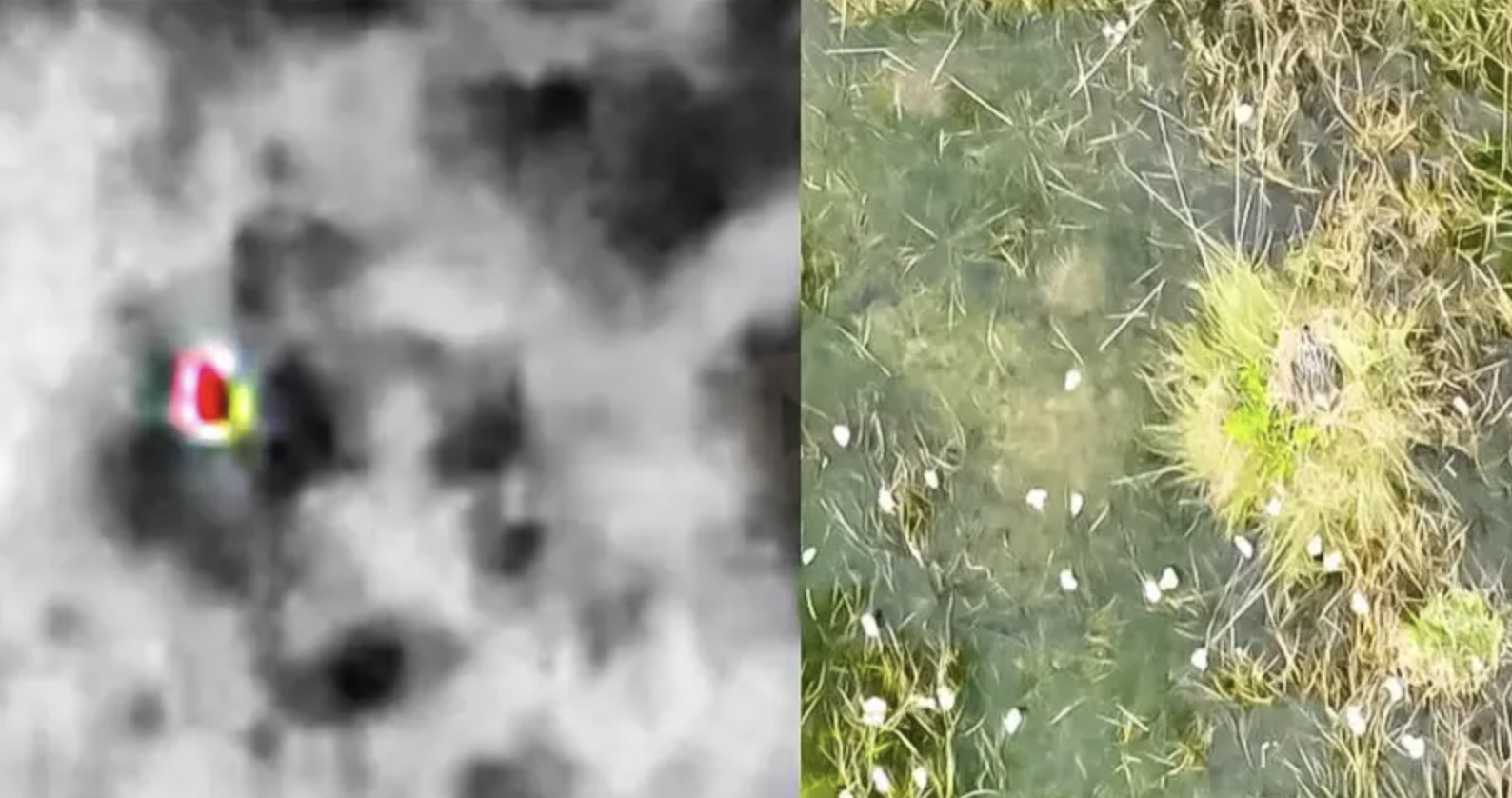
Why thermal drones are so effective for nest detection
Thermal imaging offers several advantages over visual surveys:
Incubating birds appear warmer than surrounding vegetation
Nests retain heat even when adults briefly leave
Early morning or evening surveys maximise temperature contrast
Camouflaged species become visible despite cryptic plumage
These benefits make thermal drones particularly useful for waders such as curlew, lapwing, and dotterel, whose nests are often located in open grassland, moorland, or bog habitats.
Improving conservation outcomes
Once nests are detected, Ecotainment’s surveys support conservationists to:
Install predator-exclusion fencing
Mark locations to avoid accidental disturbance
Adjust land management practices
Monitor breeding success remotely
Target habitat improvements
A growing role in ground-nesting bird protection
From locating dotterel on remote uplands to finding hidden curlew nests in Welsh grasslands, thermal drones are becoming an essential tool for us a ecologists and conservationists. At Ecotainment, we are uniquely positioned to deliver these surveys across the UK.
If you’d like to hear more, please do get in touch via Contact@Ecotainment.co.uk